

| Situation | What helps | Planning use |
|---|---|---|
| Right after a hard shift | Full attention, with phones and other distractions put away | Make this the opening move of the first conversation, before logistics or news. |
| While they vent | Listen without interrupting and show you are engaged | Save questions and suggestions until they have finished. |
| When you cannot tell what they want | Ask whether they want you to just listen or to offer input too | Use it whenever the right response is unclear. |
| When they open up, even a little | Validate the reaction and affirm the attempt | Keeps the door open for the next conversation. |
| When stress lingers or worry grows | Encourage contact with a physician, psychologist or counselor | Raise it calmly, at a quiet moment rather than mid-argument. |
| In a clinical emergency | Call emergency services or the 988 line, or go to the nearest emergency room | Act immediately; do not wait for a better time to talk. |
These figures and moves draw on the active listening guidance at Relate and the professional-help guidance from Z Psychology.
Here is how to help a stressed spouse who is a doctor: give full attention first, listen without rushing to fix anything, ask what kind of support they want, and nudge toward a professional when stress does not ease.
The ideas below suit anyone married to a doctor and dealing with ordinary, day-to-day pressure. For the longer story, read about how physician burnout affects marriage. If your spouse is still in training, how to support a spouse in residency covers the extra strain of those years.
The first minutes after a hard shift
Physician stress tends to arrive through the front door with the person. What you do in the first few minutes sets the tone for the evening, and attention matters more than any particular sentence.
Offer your full attention
Relate describes the foundation of active listening as full attention, with no phones and no distractions. Z Psychology makes the same point, describing presence as putting aside distractions like phones, TV or work.
In practice, put your own screen face down, turn off the television and face your spouse. This suits the moment when your spouse clearly wants to talk. It is also worth doing when you are unsure, because it costs little and signals that the evening is not another demand.
Let them listen to themselves first
Not every doctor wants to speak the moment they arrive. If your spouse goes quiet, a short pause is a reasonable response, and you can stay nearby and available without pressing. Wait for a signal, then use the questions in the next section to find out what they need.

Listen without interrupting
The Relate advice is blunt: listen without interrupting, nod and show physical engagement. Doctors often spend their working hours in a rapid exchange of questions and decisions. Home can be the one place where a story is allowed to take as long as it takes.
Active listening is a skill, not just nodding while a partner vents. Eye contact, a turned body and a steady, unhurried presence all count as part of it.
When your spouse wants to talk
Once they start, the aim is to help them feel understood. A few choices of wording do most of the work here.
Ask what kind of listening they want
The simplest tool is a direct question. Relate suggests asking, “Would it help you if I just listened, or are you wanting some input too?” It removes the guesswork, and it spares you from offering solutions that were never requested.
This works best for a partner who tends to fix things. If your instinct is to help by solving, the question gives that instinct a place to go without taking over.
Validate before you solve
Relate warns that jumping into fixing mode too quickly short-circuits connection. When a stressed spouse describes a bad day, a plan can sound like a verdict that they handled it badly.
A better first response is to acknowledge the reaction. Relate offers a simple example: “That makes sense to me.” It commits you to nothing except taking their reaction seriously, which is what most people want from the first few sentences of a vent.
Say it with empathy, not strategy
Z Psychology defines empathy as the ability to understand and share the feelings of others. That definition is a useful test for what to say. A comment that shows you grasp how the day felt is empathy. A comment that tells them what to do next is a different task, best held back until they ask for it.
What to avoid, then, is mostly about timing: interrupting, reaching for your phone, and offering a fix before they have finished. None of these is a harsh phrase. Each one just tells a tired person that the conversation is not really about them.
Affirm the attempts
Relate recommends that when a partner manages even part of what you hoped for, you affirm it, with a line such as thanking them for listening without jumping in. The same habit transfers well to a spouse who is not used to talking about work. If they share something small, or accept a bit of help, say thank you. That acknowledgment makes the next attempt easier.
When talking is too much
Some evenings a doctor has nothing left to say, and pushing a conversation can add to the load. In those moments, shared and undemanding activities are a sensible alternative. The suggestions here are practical ideas rather than findings from the research above, so treat them as options to offer, not prescriptions.
Cook or tidy together
A shared routine gives you company without a requirement to talk. Cooking is a good candidate because it has natural jobs for two people, and conversation can start or not as it likes. Let your spouse choose their task, or offer to take all of it if they would rather sit.

Offer a walk
An evening walk gives the same low-pressure company with a change of scene. Ask once, plainly, and accept a no without comment. Walking side by side also suits people who find eye contact heavy after a long shift, because nobody has to face anyone.
Take something off their plate
Practical help is a quiet form of support. If you notice a chore or errand that would otherwise land on a drained spouse, take it without announcing it. It is a way of lowering stress that does not ask them to explain anything.
When stress may need professional help
Day-to-day support has limits. If stress seems to be getting heavier, lasting longer or crowding out the rest of life, a partner is not a substitute for a trained professional.
How to nudge without pushing
Pick a calm moment, not a fight or a late night. Start from what you have noticed and how you feel, and keep the suggestion open: ask whether talking to someone might help. Aim to be an ally in the decision, since a doctor who feels cornered or labeled is more likely to shut the conversation down.
The principle from Z Psychology is simple: when you are concerned, seek guidance from a qualified professional, such as a physician, psychologist or counselor. Your own worry is a valid reason to raise it.
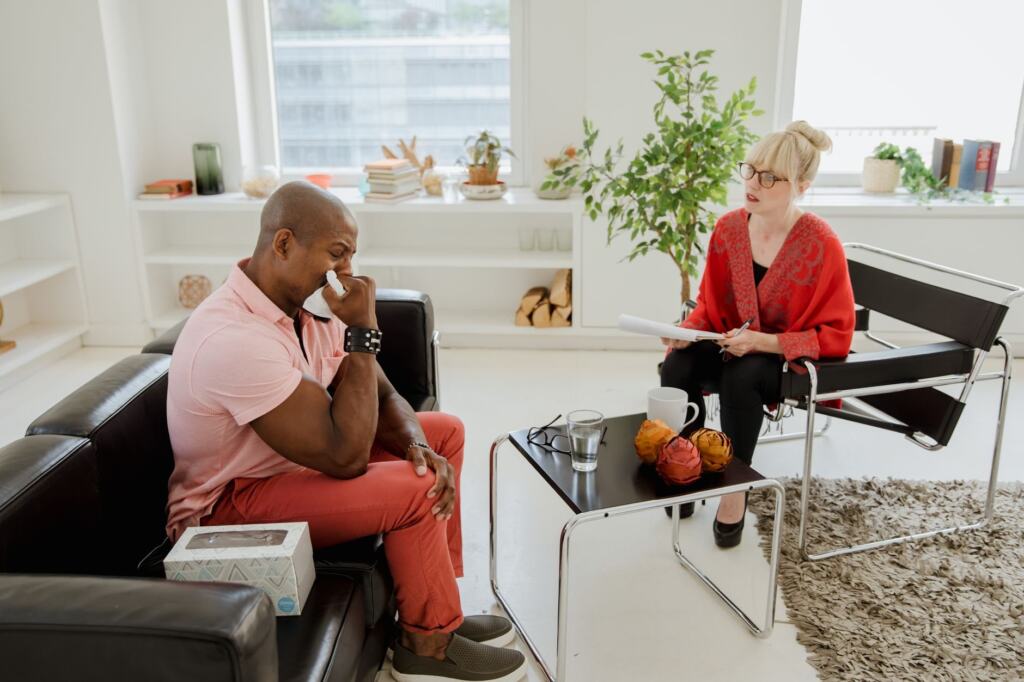
Where physicians can find confidential help
Confidential help begins with a qualified professional. For a doctor, that can mean their own physician, a psychologist or a counselor. Offering to help find a name or make a booking removes a practical barrier, and it keeps the decision with your spouse. Physicians often struggle to be the patient, so the offer itself may matter.

Frequently asked questions
| Question | Answer |
|---|---|
| Is nodding enough when my spouse vents? | No. Relate notes that active listening is not just nodding along while your partner vents, so pair the nodding with attention and an acknowledgment. |
| Can my own tiredness get in the way of listening? | Yes. Z Psychology lists work stress and exhaustion among the factors that make active listening hard, so a short break before the conversation can help you both. |
| What counts as an emergency? | A clinical emergency calls for immediate action. Z Psychology advises calling 911 or 988, or going to the nearest emergency room. |
| Do I need to be a doctor to help? | No. The moves that matter here are attention, patience and wording, and none requires medical knowledge. Medical questions and concerns belong with a qualified professional. |